
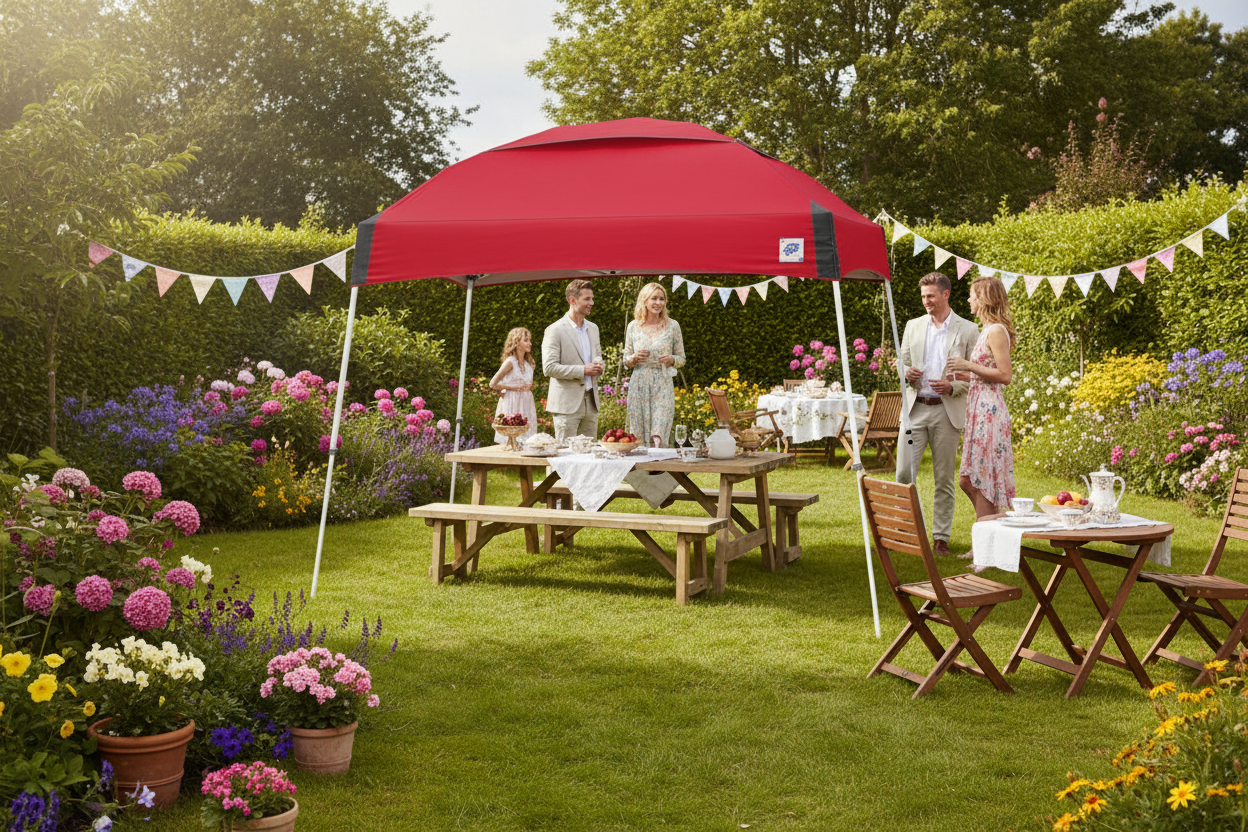
The best gazebosfor windy conditions in the UK are strong, well-anchored models with durable frames, quality canopy materials, and the right setup. If you choose a reliable structure and secure it properly, a gazebo can handle typical UK wind and still give you a comfortable outdoor space.
Wind is one of the main challenges when using a gazebo in the UK. Open gardens, exposed fields, and coastal areas can all create sudden gusts that put pressure on lighter shelters. The key is not just the gazebo itself, but how you use it.
What Makes a Gazebo Suitable for Windy Conditions
Frame strength and materials
A strong frame is the first thing to look for. Lightweight frames can shift or flex too easily in wind. Aluminium offers a good balance between strength and portability, while steel provides extra weight and stability for more permanent setups.
E-Z UP models are designed for repeated outdoor use, which makes them more reliable than low-cost alternatives that struggle in changing weather.
Canopy design and airflow
A gazebo roof should not act like a sail. Tensioned canopies reduce flapping and improve stability. Some designs allow airflow at the top, which helps reduce pressure during gusts.
If your canopy starts to sag, it is more likely to catch wind. Keeping the roof tight and in good condition is essential.
Size and stability
Larger gazebos provide more coverage, but they also catch more wind. A 3m x 3m setup is often easier to manage in exposed gardens. Bigger models work well when properly anchored and positioned with some natural shelter.
Best Types of Gazebos for Windy UK Weather
Aluminium vs steel frames
Aluminium frames are easier to transport and set up, which suits homeowners and weekend use. Steel frames offer more weight and can feel more stable when left in place for longer periods.
Professional grade pop up gazebos
Not all pop up gazebos perform the same. Higher quality models, like the Endeavor or the Eclipse Steel range of gazebos are built for regular use and stronger conditions. The difference shows in the joints, frame thickness, and canopy quality.
When size matters
Smaller setups are easier to control in wind, especially in gardens without shelter. Larger gazebos are better suited to events or spaces where you can anchor them properly and position them away from direct exposure.
How to Set Up a Gazebo in Wind
Positioning and natural shelter
Placement matters as much as the gazebo itself. Set up near fences, hedges, or buildings where possible. These features help break the wind before it reaches the structure.
Avoid placing your gazebo at the highest or most exposed point in your garden.
Anchoring and weights
A gazebo should never be left unsecured. Use proper weight bags, ground stakes, or fixed anchors depending on the surface. Each leg should be secured evenly to keep the structure balanced.
In stronger winds, increasing the weight per leg improves stability.
Using sidewalls correctly
Sidewalls can help block wind, but they can also catch it if used incorrectly. In light wind, they add protection. In stronger gusts, leaving one or two sides open allows airflow and reduces pressure on the frame.
Using Gazebos for Garden, Events, and Camping
Garden use and entertaining
A garden canopy gazebo creates a sheltered space for seating, dining, or relaxing. Even in windy conditions, a well-positioned gazebo makes outdoor areas more usable.
Sports and events
Football matches, rugby training, and outdoor events often continue in poor weather. A stable gazebo provides cover for players, equipment, and spectators, helping everything run more smoothly.
Camping setups
For camping, a gazebo adds a shared space separate from your tent. It gives you a place to cook, sit, and store gear under cover. This is especially useful in UK conditions where wind and rain can change quickly.
Common Mistakes to Avoid
Placing a gazebo in an exposed area without shelter
Using insufficient weights or uneven anchoring
Leaving the canopy loose or poorly fitted
Keeping all sidewalls closed in strong wind
Ignoring early signs of wear or frame movement
FAQs
What wind speed can a gazebo handle in the UK
Most pop up gazebos are suitable for light to moderate wind when secured properly. In strong winds, it is safer to take them down.
Should I leave my gazebo up in winter
You can, but it must be secured and checked regularly. Many people choose to pack it away during severe weather.
Are pop up gazebos suitable for windy gardens
Yes, if you choose a strong model and anchor it correctly. Placement and setup make a big difference.
Conclusion
A gazebo can work well in windy UK conditions if you choose the right model and set it up properly. Strong frames, secure anchoring, and smart positioning all help improve stability. With the right approach, you can keep your outdoor space usable even when the weather is less predictable.
